Standing where he stood, and reading the water as he read it.
The huer’s job was simple to describe and hard to do well. Stand on the headland, watch the water, and spot the shoal before anyone else could.
Pilchards move in vast numbers close to the surface, and from height, a shoal shows itself as a reddish-brown stain spreading through the sea — visible from a lookout point long before it could be seen from a boat at sea level. That’s the entire reason a building exists on this headland at all: height, and a clear view out across the bay.
Once a shoal was spotted, the huer had to move fast. He’d signal down to the boats waiting below using furze bushes — bunches of gorse, held and waved in a kind of semaphore, directing the seine boats toward the water he’d marked. And he’d call it: Hevva! Hevva! — the cry that gave the whole practice its name, and the one that could empty a town onto the beach in minutes.
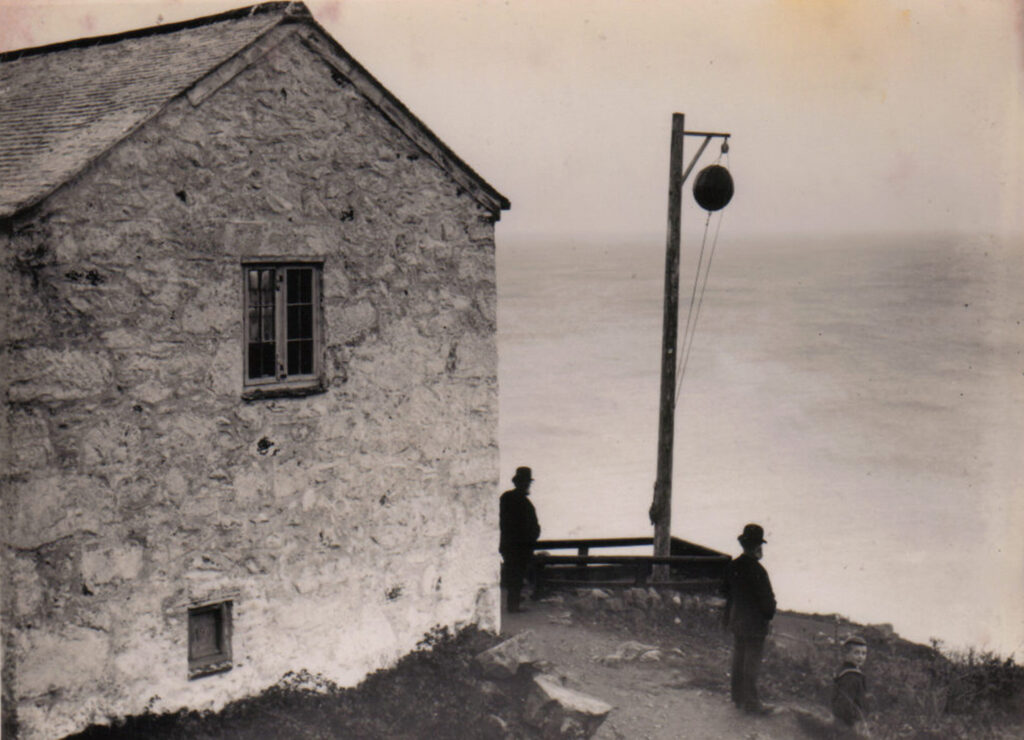
It’s a strange thing to stand in that same spot now. The pilchard shoals that justified the building are long gone from these waters. But the view hasn’t changed, and neither has the reason anyone would choose to stand there: it’s still the best vantage point on this stretch of coast, and it’s still worth watching.
Hevva, hevva! — the cry that emptied the town onto the beach.